
Month: June 2022

  • The 5 best morning routine ideas of highly-productive people

    The 5 best morning routine ideas of highly-productive people

    A good morning routine sets the productivity tone for the day. But is it really as simple as a morning ritual and a healthy breakfast? After analyzing the advice and morning routines of six top productivity experts, we’ve pinpointed the most common practices of successful people for a productive morning. No matter how much chaos happens when your eyes open, know this: A morning routine for better productivity is a learnable science.

    1. Wake up at YOUR right time

    “Morning people” are supposed to be the high achievers. The early bird is supposed to catch the worm, right? And a cold shower to wake up? Groan. Where’s the snooze button on that? Can the early (or late) hours you sleep really make a difference?

    One 2021 academic study found that waking up just one hour earlier was associated with a 23% lower depression rate. While some people who wake up earlier are more productive, night owls can still have a perfect morning routine that leads to a productive day. Think of it like breakfast and brunch. They’re both delicious, and they both work if you’re hungry.

    Mike Vardy, productivity author, speaker, podcaster, and blogger at Productivityist, wrote, “Look, I’m a night owl—and proud of it. Why? Because despite having many say that my sleeping habits make me less likely to achieve, I prove them wrong. I don’t just do that every once in a while. I do it every single day.” The most important thing isn’t what time you get out of bed. It’s getting in tune with your body’s clock for a good routine. 

    According to Sleep.org, your body knows what it should be doing and when. Don’t force yourself to be part of the 5:00 a.m. club if you can’t fall asleep before midnight. Forcing yourself out of bed is a recipe for burnout. If you’re not a morning person, your body will only work with you for a few days before it begs for mercy.

    Good ol’ science can help you find your most productive time of day.

    2. Prepare the night before to eliminate morning decision making

    Many productivity experts and successful people spend evenings preparing for the next day. Their recommendation: It leaves mornings free for an early start on important work (and breakfast). 

    Subscribe to the idea that an a.m. routine can start in the p.m. Lay out your outfit for the next day. Pack your lunch. And create your checklist or a to-do list. Former American Express CEO Kenneth Chenault told Fast Company they end their evenings writing three things they want to accomplish the next day. We have a limited amount of willpower and decision-making ability. Too many decisions in the morning slow us down and drain our brain for the rest of the day. Eliminate morning decision-making for more energy and more time for productivity.

    3. Create a morning routine to focus your mind

    Erik Fisher is the voice behind the Beyond The To-Do List Podcast. He’s interviewed over 100 different productivity experts on topics like lifehacking, work-life balance, and creativity. He points out that if you analyze productivity experts’ morning routines, you’ll find a few things in common. Most focus on big picture goals, gratitude, and planning for the day. 

    Productivity coach Zack Sexton’s morning routine looks like this:

    1. Water (20oz. often w/ lemon)
    2. Cuddles (w/ fiancée Nikida)
    3. Coffee
    4. Meditation
    5. Read something inspirational (often in sauna)
    6. Shower (if sauna-ed)
    7. Look at calendar
    8. Start first journal entry (including prompts about something learned, things to be grateful for, and what to focus on for the day)

    Set your mind on what you want to focus on for the day, and set your heart and mind with the right attitude. Kevin Kruse, author of 15 Secrets Successful People Know About Time Management, starts their morning with five minutes of yoga stretches that accompany:

    1. Mental recitation of their personal mission statement
    2. Listing three items of gratitude
    3. Repetition of their three goals: Health, wealth, and love

    Kevin thinks of what tasks he’ll do that day to help achieve each goal. “All that takes about five minutes,” he says.

    You don’t need a lengthy meditation routine. Yoga, meditation, journaling, reading, or a quiet walk can help you focus on a positive outcome for the day.

    4. Move around and hydrate in the morning

    When you feel great, it makes it easier to handle the morning alarm clock. If it’s hard just get out of bed, you probably won’t be excited to run to the gym—and that’s ok. Simply moving your body will get your blood flowing and help get your day started.

    Many successful people start their mornings in motion. Follow their lead to add some health to your life:

    While you’re moving, stay hydrated. What you put in your mug matters. Drink water in the morning to kickstart your day and give you lasting energy.

    Jeff Sanders, author of The 5 AM Miracle and host of the podcast with the same name, says his favorite morning habit is to drink one liter of water within the first 45 minutes of bouncing out of bed. “Hydration is incredibly important, especially after waking up. I always find that this larger quantity of water provides incredible energy and prepares my body for the day ahead.”

    5. Eat the frog—or tadpole—first thing in the morning

    Brian Tracy, author of Eat That Frog! 21 Great Ways To Stop Procrastinating And Get More Done In Less Time, bases his morning philosophy off of a quote from Mark Twain. “If the first thing you do each morning is to eat a live frog, you can go through the day with the satisfaction of knowing that that is probably the worst thing that is going to happen to you all day long.”

    The “frog” is your most important task or work—the one you’re dreading the most because it’s large and looming over you. Build the habit of doing your biggest task first for a huge boost of accomplishment first thing.

    But procrastination is real, making it even harder to get your day started. Whether you eat the frog or tackle some small tadpoles first, find your ideal morning routine rhythm and get started.

    Create your ideal morning routine for a productive day

    Mornings don’t have to be rough, and you can learn to become more productive throughout the day. No need to overhaul your morning routine all at once; introduce one new practice a week and track your improvement. They say if you win the morning, you win the day.

  • 4 reasons for project fails—and how to prevent each one

    4 reasons for project fails—and how to prevent each one

    We’re living in the golden age of failure, where tech culture embraces a “fail fast” mentality and celebrates lessons learned from missteps. But when it comes to that upcoming project you’re leading, given a choice, you’d much rather succeed. 

    But the truth is, whether they’re delivered late, go over the budget, or they don’t meet expectations, many projects do end up failing. The 2017 Pulse of the Profession survey from the Project Management Institute (PMI) reports that poor project performance leads to $122 million wasted for every $1 billion invested.

    Beyond monetary losses, there’s the negative impact on team morale and the time you can never get back. For these reasons and more, it’s wise to learn the main reasons for project failures—and how you can stop them in their tracks.

    1. The project lacks defined goals and milestones

    The PMI survey also found that the main cause of project failure was a “lack of clearly defined objectives and milestones to measure progress.” 

    Clearly defined goals boost team performance, according to a Leiden University study. And setting milestones helps your team know they’re making progress and keeps motivation from waning, especially when the project takes months or years.

    How to fix it

    Popularized by venture capitalist John Doerr, OKR stands for “Objectives and Key Results.” The objective is the goal (what do you want to do?). The key result is a milestone that shows progress (how will you know you’re making progress toward the goal?). Many organizations create company-wide and team-specific OKRs, and the same framework can be applied to your project.

    For example, you might be working on improving your email marketing campaign. An OKR for this specific project might look like this:

    Objective: Increase email campaign engagement to support sales initiatives

    • Key result 1: A/B test all email subject lines to increase open rate by 10%.
    • Key result 2: Invest $1,000 in paid email advertising to boost subscriber count by 10,000 by Q2.
    • Key result 3: Spend 20 hours researching and analyzing top-performing CTAs to increase CTR by 5%.

    And because we discussed the importance of accountability, take it a step further and assign an owner to each key result. They’ll be responsible for deciding the tasks that will lead to each key result.

    Feeling motivated? Trello has a free OKR template to get you started.

    2. There’s no real accountability

    “If everyone is accountable, no one is accountable.” In social psychology, there’s a term for this: diffusion of responsibility. The higher the number of people present, the lower the chances that any individual will step up to the plate because they assume someone else will.

    Gartner analyzed more than 50 IT projects and found that complexity without accountability often leads to project failure. “Complex projects with unrealistic goals, unproven teams and almost no accountability at all levels of the management and governance structure, means no one is responsible for failure,” writes Gartner contributor Susan Moore.

    But contrary to popular belief, the fix is not to increase oversight. “When a project starts to stumble, increasing the volume and scope of upward reporting will only place more burden on the project and will be unlikely to improve the likelihood of success,” Moore writes.

    This is also known as micromanaging, and it’s a productivity killer. In an Accountemps survey, 68% of employees said micromanagement hurt their morale, and 55% said it decreased their productivity.

    How to fix it

    Increase accountability by assigning an owner to each part of the project. That way, every team member knows what they’re responsible for and has autonomy over their decisions for that specific task. This is not micromanaging. By allowing each owner to control the decisions they make, you’re telling them you trust them.

    By letting each team member know exactly which part they’re responsible for, you’ll boost the chances that the task gets done. Why? Because it removes confusion for your team, and now everyone knows who owns what, so it’s easier to identify who is holding a project up and who can give the best status update. 

    Build accountability in projects managed in Trello by adding members to a card or by assigning them tasks within checklists on a card. Once added, they’ll receive notifications anytime that card is commented on, moved, or assigned a due date.

    3. Something went wrong in the planning phase

    PwC found that insufficient resources, poor estimates, and scope changes are some of the top contributors to project failure. How do you prevent all of these? Proper planning.

    While it’s not nearly as exciting as the doing part, the planning phase is necessary for scoping and gathering requirements for the upcoming project. Poor planning results in:

    • Inaccurate estimates: A crucial part of project planning is estimating the time and cost of the initiative. While an estimate is never expected to be exact, if it’s rushed or too far off, it can derail an entire project.
    • Scope creep: Failing to understand a client’s needs or setting boundaries before the project begins can lead to scope changes mid-project—leading to more work on your part. 
    • Insufficient resources: Part of project planning is calculating and assigning appropriate resources to the project, whether that’s team members, tools, or workspace. Insufficient resources can hobble an initiative, and render it incapable of crossing the finish line.

    How to fix it

    Don’t rush the planning process. While a bias toward action can be a good thing, if you’ve got a long and pricey project coming up, this is not the time to rush headlong into it. All of your planning should involve real-world data based on experience in similar projects, and you should consult with experts if possible. 

    Ensure nothing gets missed by creating a visual way to track tasks, project objectives, necessary resources, and timelines by mapping out your project in Trello. This will make it easier for team members and stakeholders to review and give feedback on the project before you begin the execution.

    4. Your process can’t adjust quickly to change

    Even if you conduct excellent planning, no one can predict the future—and you certainly can’t control everything. 

    You might deliver website designs that meet the project scope, but the client doesn’t like any of them. You might have forecasted the cost early on, only to find out a supplier has increased their prices. You might have used the smartest methods for estimating schedule—only to have that schedule upended by a global pandemic. 

    How can you adjust to change without ruining the entire project? By expecting change and remaining flexible. And lucky for you, there’s an entire methodology made just for that.

    How to fix it

    While there are many things you won’t be able to control, there is one way to mitigate risk and unearth problems before you get to the end of a six-month project: Agile methodology. Practically any project can benefit from this way of managing projects.

    So, what is agile methodology? Originating in software development, agile methodology is “based on iterative development, where requirements and solutions evolve through collaboration between self-organizing cross-functional teams,” according to consulting firm Cprime. It’s a way of getting things built faster and adjusting to changes quickly while the product is still in development. Many frameworks exist for agile, but we’ll focus on scrum.

    The Macmillan Dictionary defines the adjective “agile” as “able to move quickly and easily,” and that’s precisely what scrum, one way of implementing agile, is made to do. By breaking the entire project down into time-limited, narrowly-scoped “sprints,” teams are able to quickly gather feedback during the project, review what they’ve learned, and re-scope as needed before moving on to the next sprint. 

    This is in direct contrast to the rigidity of sticking to the project plan, no matter what—and delivering at the end only to find out that it’s not what you or the client actually needed.

    With scrum project management, you get feedback as you go. This gives you time to readjust during the project before you’ve invested all your resources into something that needs to change.

    And it’s beneficial for your entire company, too. According to PMI, highly agile organizations successfully complete more of their projects than less agile organizations.

    Here’s a Trello Marketing Sprint template to get you started.

    Become a project management pro

    Failure is a fact of life, but that doesn’t mean your project is doomed to it. By establishing OKRs, assigning owners, planning sufficiently, and practicing agile project management, you can greatly improve your chance of project success.

  • Inclusivity Tip

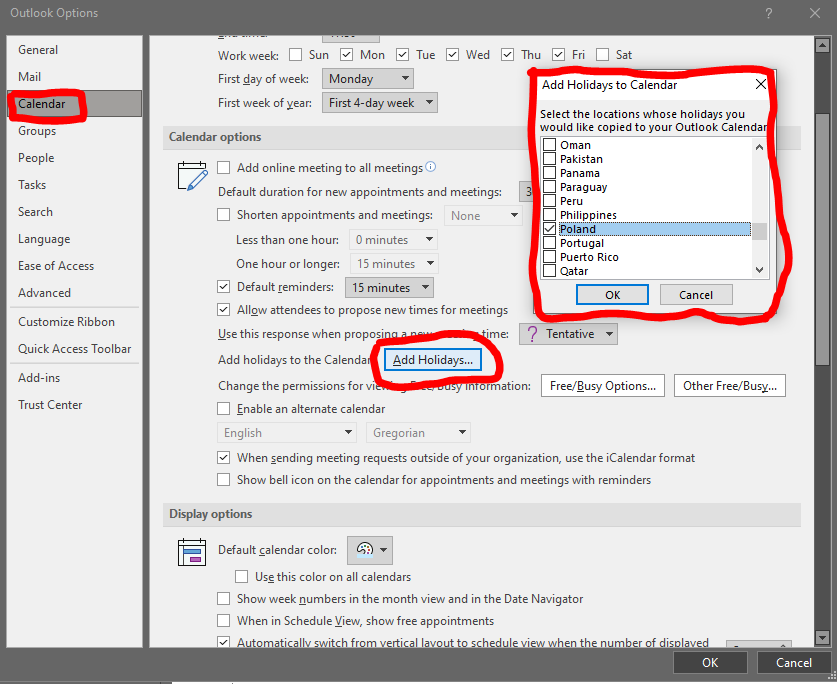
    Within Outlook you can add holidays for the UK as well as other countries which can help give you visibility of holidays, festivals or religious events from around the world. This can help drive conversation about things that might matter to people in your team you otherwise might not know about. For example I recently learned about Fat Thursday or Tłusty Czwartek celebrated in Poland ahead of Lent. You can add them in Outlook by going File > Options > Calendar > Add Holidays…